How Rotherglen Students Built a Miyawaki Forest
How Rotherglen Students Built a Miyawaki Forest
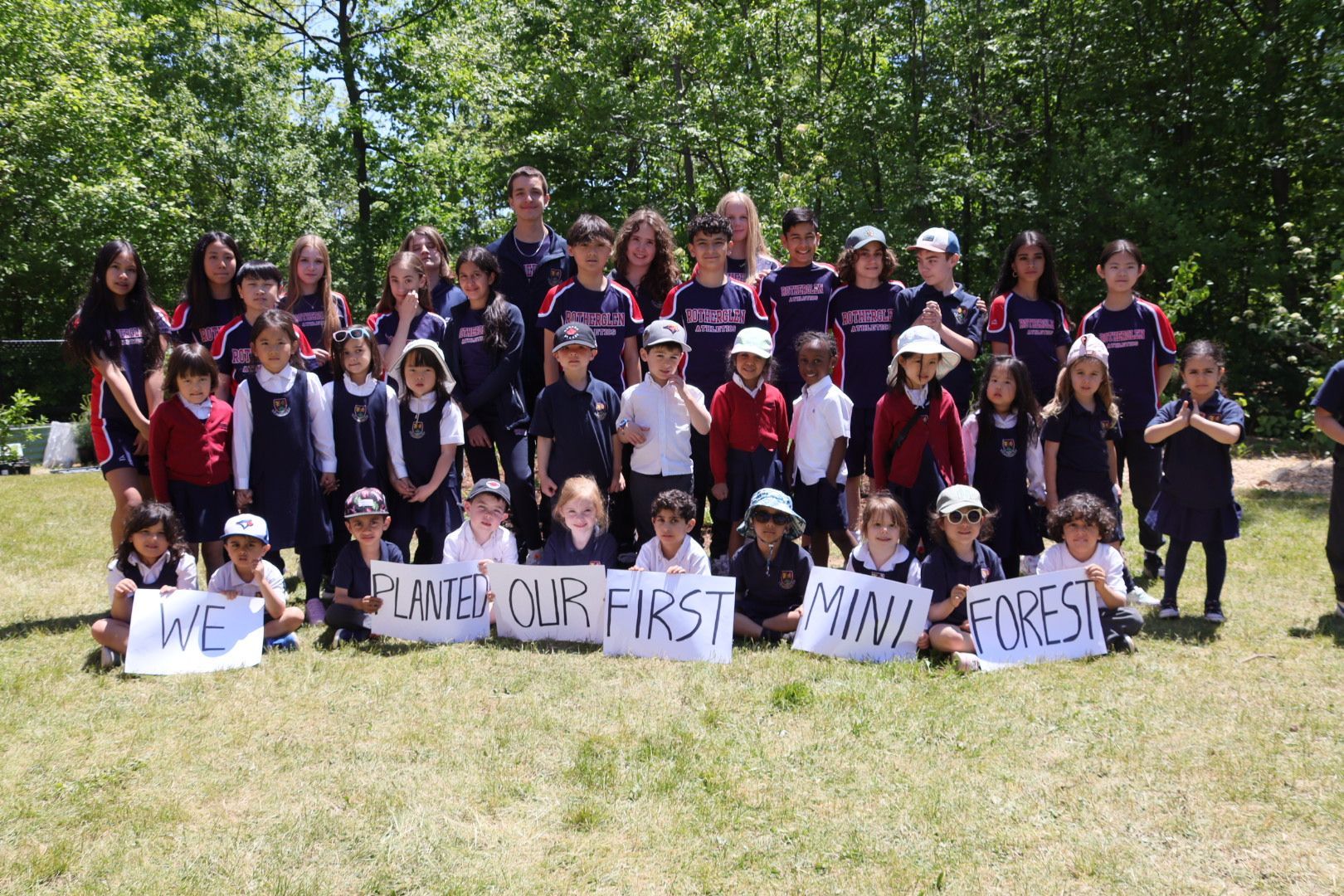
Over the past few weeks, Rotherglen students got the opportunity to collaborate with Oakvillegreen representatives, who assisted us into creating a sustainable gateway into our future.
Our first order of action was removing common Buckthorn species from our forest. This was really beneficial in supporting biodiversity in our forest because we were removing an invasive species that changed the chemical composition of the soil to only suit itself. With the help of Oakvillegreen, we learned about the invasive species' appearance to mark all of the Buckthorn plants prior to removing them using trimmers, extractigators, and shovels.
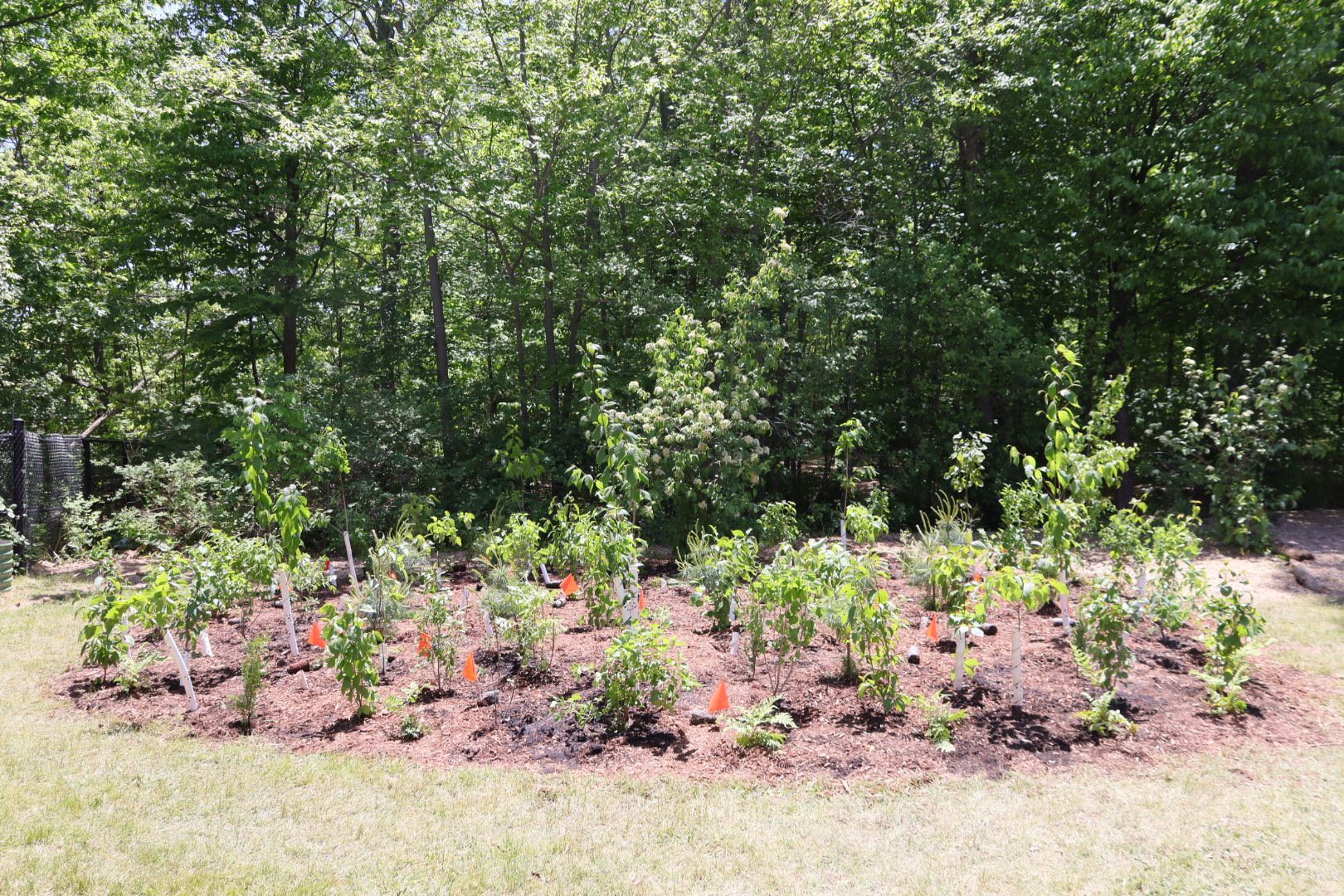
Following our site preparation work and research into the Miyawaki method, we worked alongside Oakvillegreen to plant a variety of native trees and shrubs. The species were planted closely together to encourage natural competition for resources such as sunlight and water, which helps promote faster growth and the development of a healthy ecosystem. Planting day was one of the most rewarding parts of the project because we were able to see our planning and preparation come together. It was especially meaningful to know that the work we did, will continue to benefit our school community and local environment for many years to come.
While doing our research on the Miyawaki method prior to planting the trees, we learned about the natural competition that took place between the variety of native species in the pocket forest. Because of their need for sunlight in the photosynthesis process, the competition rapidly increases the growth rate of all the different species. It was really interesting to see this biotic interaction first hand, and apply it to how the ecosystem functions, as it tied back to the Ecology lessons we previously did in class. An example that we were able to witness, was competition between the Buckthorn and the other plants living in the Pocket Forest. This resulted in us having to remove the Buckthorn, as it was interfering with the soil composition.
This initiative was not only beneficial to our environment, but this project strengthened our school community. Students across multiple grades were brought together and educated about our environment, while each and every student were able to create a place where students can continue to collaborate on ideas, and explore. As Rotherglen students, we were able see first hand the accomplishments we can make when working collaboratively. These steps that we took to build a local ecosystem will increase habitats for organisms, further develop interactions among a number of living things, and clean greenhouse gasses from the air.
We could not have done this project without the help of Oakvillegreen representatives. Oakvillegreen is far more than just an organization. They worked to strengthen biodiversity, educate and engage students of all ages, as well as fully change how we all saw and appreciated our surroundings. By partnering with Rotherglen School, they have helped to transform an average, everyday space at our school into a thriving, biodiversity-rich habitat, building a more sustainable future for our community.
This blog post was written by Rotherglen Elementary students: Zoe Benning, Sylvie Foulon, and Miraaya Kumar